First-Timer's Guide to Joshua Tree National Park
From my October visit, I learned the secret to enjoying Joshua Tree is timing your trip between October-May and starting early—here's how to maximize 4-5 hours in this stunning desert park.
When we first moved to the Bay Area from Singapore, one of the things I was most excited about was having access to all these incredible national parks. In Singapore, "nature" means a walk through Gardens by the Bay or maybe a hike at Bukit Timah (lovely, but not exactly vast wilderness). So the idea of driving a couple of hours and ending up in an actual desert with alien-looking rock formations? Sign me up.
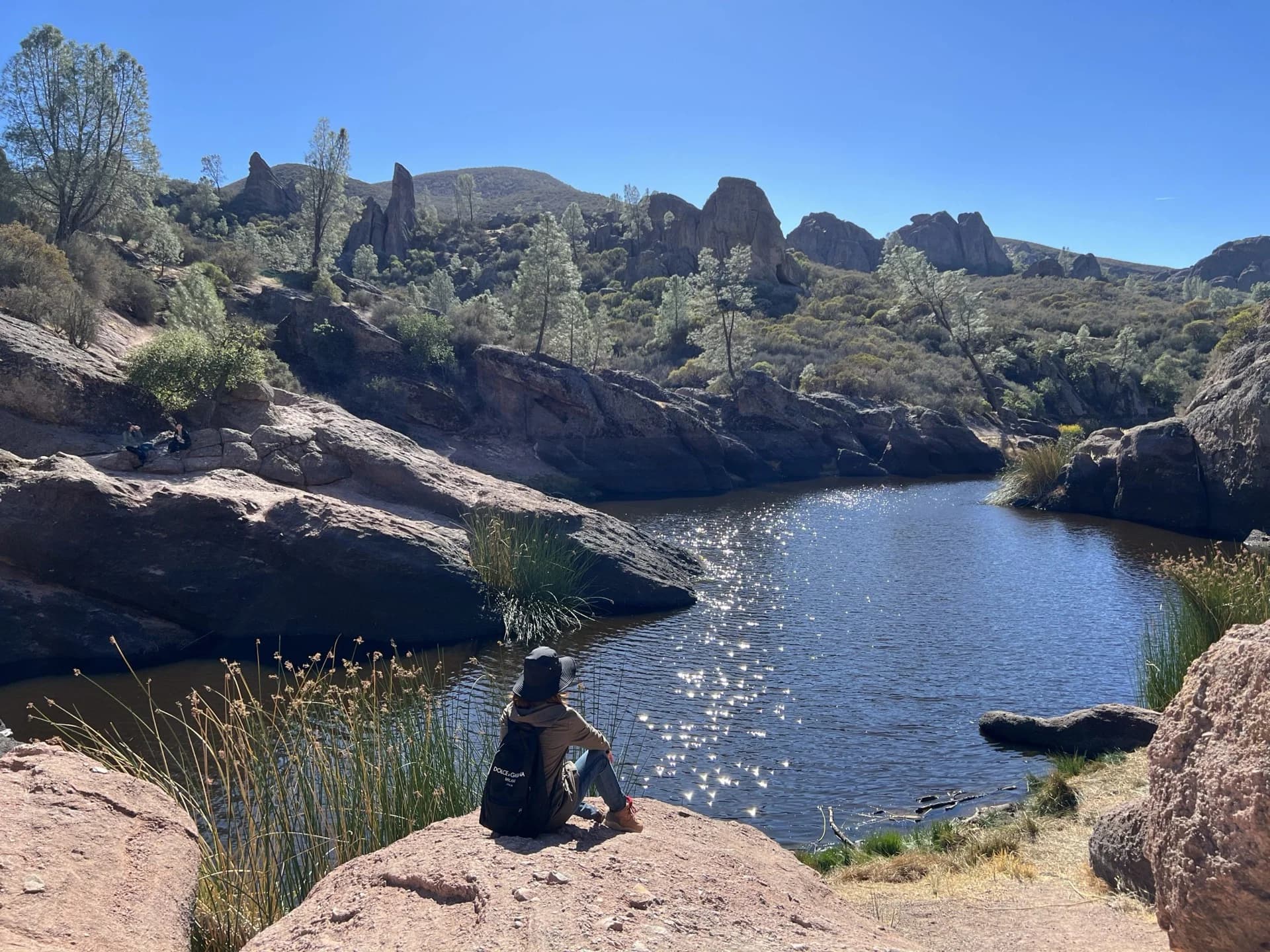
Joshua Tree National Park was one of our earlier trips, and honestly, it exceeded my expectations. Sophie had a blast scrambling over rocks, and I got to feel like we were on another planet for a few hours. Here is what I learned from our visit that I think would help if it is your first time too.
1. Pick the right month
Joshua Tree is a desert — and I say that as someone who grew up in tropical heat. Singapore hot and desert hot are very different beasts. The best time to visit is between October and May when temperatures are more manageable. June through September can be brutal, so unless you enjoy feeling like you are standing inside an oven, I would avoid those months.
We went in October, and while it was hot, it was bearable. Before you go, check the Joshua Tree National Park website for any closures or alerts, especially during summer when fire closures can happen.
2. The drive from LA is genuinely beautiful
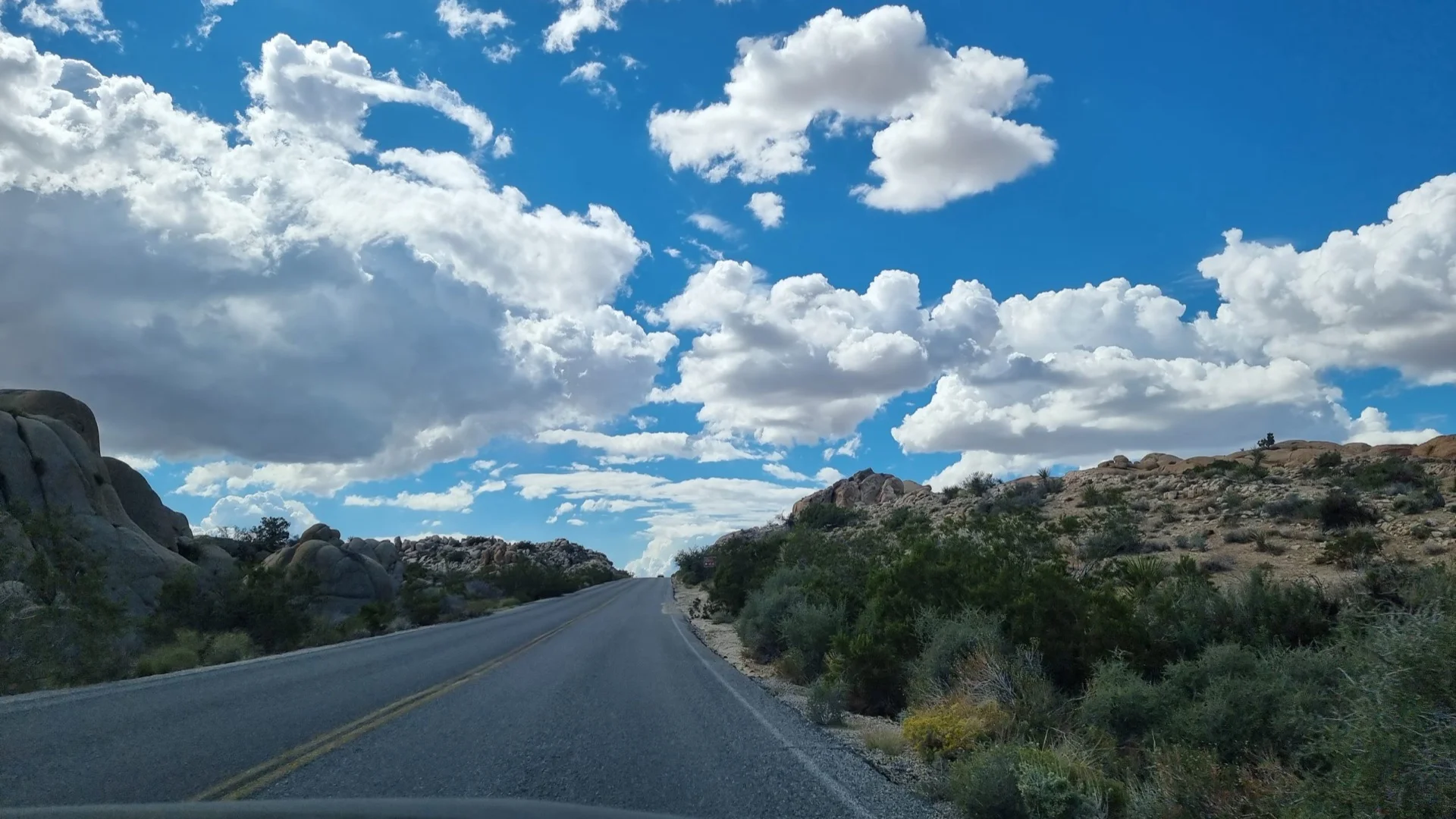
The drive from Los Angeles to Joshua Tree is about two and a half hours, and it is one of those drives where you actually want to be awake and looking out the window. The landscape transitions from urban sprawl to open desert in a way that still amazes me — coming from a tiny island city-state, the sheer scale of California geography is something I do not think I will ever get used to :)
We left early in the morning to beat the heat. Here are some pictures from the drive:
3. There is food nearby (we panicked for nothing)
This was a funny one. Every blog post and forum we read beforehand kept stressing "bring tons of water and food, there is nothing there." So we packed like we were going on a three-day survival expedition. Turns out, the towns just outside the park (about a 15-minute drive) have plenty of restaurants and shops. You can eat there before entering the park or grab extra water and supplies.
I am not saying do not bring water — you absolutely should, especially once you are inside the park — but there is no need to pack a week's worth of provisions like we did :P
4. Stop at the visitor center first
When you first enter the park, hit the visitor center. Free map, helpful rangers, and good advice on how to spend your time. We told the ranger we had about 4-5 hours (we did not want to stay overnight), and they mapped out a great route for us. Super helpful.
We also bought some souvenir items to support the local community, which Sophie was very excited about.
Quick tip: if you stop at the visitor center, skip the "Cultural Center" — it is essentially the same thing.
5. You can drive between attractions inside the park
The road conditions inside Joshua Tree are excellent — smooth, well-maintained, easy to navigate. This was a relief because I had imagined some rugged off-road situation (maybe too many movies). You can comfortably drive between different points of interest without any stress.
6. Hidden Valley and Skull Rock are perfect for a family hike
These were the ranger's top recommendations for us, and they delivered. Sophie could handle both trails easily, and the scenery was genuinely breathtaking. Skull Rock is exactly what it sounds like — a rock that looks like a skull — and kids love it. Hidden Valley felt like walking through a natural amphitheater.
Some pictures from Skull Rock:
And here are some pictures of Hidden Valley:
7. Bring lots of water inside the park
I know I said the food panic was overblown, but the water part is real. Once you are inside the park, there is nowhere to buy anything. It is pure wilderness. So stock up before you drive in.
8. Get the America the Beautiful park pass
The entrance fee for one car is $30 for 7 days. But if you plan on visiting multiple national parks within a year (and if you are an expat family exploring the US like us, you probably will), get the America the Beautiful pass. It is $80 per year for one vehicle and covers all national parks. We have gotten so much value out of ours.
There are plenty of other things to do at Joshua Tree, including camping overnight and birding, but for a day trip with a kid, the route above worked really well for us.
What national parks have you visited with your family? Any that surprised you?
Cheers,
Chandler
P.S. Read our complete guide: The Expat Family's Guide to US National Parks (2026) — covering all 26 parks we have visited, road trip routes, costs, and tips for international visitors.