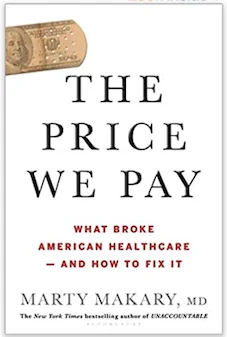
"Never pay the first bill" - a book review
This book exposed how middlemen, hospitals, and insurers profit billions from healthcare—and gave me practical tools to fight back by questioning every medical bill I receive.
I recently finished reading "Never pay the first bill" by Marshall Allen, and I highly recommend it. This book is a must-read for anyone looking to save money on healthcare in the US or simply wanting to understand more about why healthcare is so expensive here.
As a foreigner in the country, I have heard many times from friends, colleagues, and others complaining about the cost of healthcare in the US. But I haven't heard or read a clear explanation of why. This book lays bare the reasons. It is the middleman (for example, brokers, pharmacy benefit managers, etc...), the hospitals, and insurance providers, who continue to make billions of dollars in commission, and profits.
The book starts with very strong wording to describe the medical industry and its players like predatory, profit-driven system,... I was a bit uncomfortable at first with the wording. But after the author listed out many (many) examples of how the system takes advantage of people like you and me, I can understand why. Some of the stats or case studies are truly mind-boggling.
- The commission for the broker can be 40% of the first-year premium, the premium paid by the employer and you. 40%!
- A hospital marked up the price of an implant from $3,500 (what they paid) to $70,000 (what they charged the patient). A nice 20 times.
- etc...
One of the main themes that stuck with me is the importance of being an active participant in your own healthcare. I have to admit, before reading this book, I was one of those people who just paid whatever bill showed up. Coming from Singapore where healthcare costs are relatively transparent, I didn't realize how much the US system relies on you to question things. Allen makes a convincing case that too often, patients simply accept the bills they receive without questioning them, even when they seem unreasonable.
The book is packed with practical tips for negotiating medical bills and disputing charges that seem incorrect. What I found most useful is his guidance on how to actually read a medical bill and understand the billing codes. I think for expats like us, this is especially valuable because we often don't know the "rules of the game" here.
What makes this book stand out is the sheer number of real-life examples and case studies. Some of them are genuinely shocking — you read them and think "how is this legal?" :D
After each chapter, Marshall includes a short to-do list (as the summary) so that reader can take action easily. I hope that many people will take action, both as an individual, an employee or employers or other stakeholders, so that the situation can be improved over time. I have learned many practical lessons from the book and have started looking at the billing code from the most recent bill to understand it more :). It is indeed easy to search for the billing code and then read about it online to understand if the charge is accurate.
Overall, I think this is a must-read for any expat in the US. The healthcare system here can feel overwhelming and, frankly, a bit predatory at times. This book gives you the tools to fight back, or at the very least, to understand what you're being charged for. I might be wrong, but I believe if more people read this book, the system would have to change.
Have you had any frustrating experiences with medical bills in the US? I'd love to hear your stories — and whether you've had any success negotiating them down.
Cheers,
Chandler