मैंने अपने AI Strategy Agent से हमारे Landing Page का Audit कराया। यह हुआ
मैंने अपनी खुद की landing page को अपने AI strategy agent को दिया और 24 घंटों में उसे rebuild किया — जो product मैं बेच रहा हूँ उसे dogfooding करके conversion messaging transform हुई।
मैं हमारे landing page analytics घूर रहा हूँ। पिछले कुछ दिनों में 247 visitors। 3 signup requests। 1.2% conversion rate।
Private Alpha launch के लिए zero marketing budget के साथ, यह terrible नहीं है। लेकिन great भी नहीं है।
Problem obvious है: visitors page पर land करते हैं, 8 seconds scroll करते हैं, और चले जाते हैं। वे self-identify नहीं कर रहे। वे copy में खुद को नहीं देख रहे। वे यह समझने से पहले bounce कर रहे हैं कि हम क्या करते हैं या यह किसके लिए built है।
मैं एक solo founder हूँ जिसके पास 9 AI agents हैं। उनमें से एक literally एक Business Strategy Agent है जो 11 strategic frameworks — Jobs-to-be-Done सहित — business problems पर apply करता है।
इसलिए मैंने वह किया जो कोई भी rational founder करता: मैंने STRAŦUM से STRAŦUM की अपनी landing page audit कराई।
Day 1: शाम तक, revised landing page production में live थी। Same-day turnaround। Zero external consultants। बस मैं, Strategy Agent, और outcome-focused copywriting पर ruthless focus।
फिर मैंने यह फिर किया।
Day 2: मेरी whitelist confirmation email 9 agents, 3 categories, और value तक zero clear path वाली एक 500-word information dump थी। मैंने इसे Strategy Agent को दिया। एक घंटे के भीतर, मेरे पास मेरी authentic voice में outcome-focused messaging और 2-step onboarding path वाला revised email था।
यह dogfooding done right की कहानी है — दो बार — और क्यों आपके product का पहला version खुद को improve करने के लिए use होना चाहिए।
---
Problem: Visitors Self-Identify नहीं कर सके
हमारी original landing page standard SaaS playbook follow करती थी:
1. Hero section: Bold claim ("Marketing Execution Without Strategy Is Just Expensive Noise") 2. Features: Progressive Learning, 11 Frameworks, 9 AI Agents 3. Demo video: 15-minute walkthrough 4. Comparison table: हम vs. Execution-focused tools 5. Audience segmentation: SMEs के लिए, Agencies के लिए (section #6 में buried)
Structure product perspective से sense बनाती थी — problem से lead करें, solution explain करें, differentiate करें, फिर segment करें।
लेकिन यह miss किया: Users आपकी unique technology की परवाह नहीं करते जब तक वे नहीं जानते यह उनके लिए है।
एक agency owner 15 clients manage करते हुए page पर land करता है। वे "Progressive Learning" और "11 Strategic Frameworks" देखते हैं। Great। लेकिन उनके time-starved, client-juggling workday के लिए इसका क्या मतलब है?
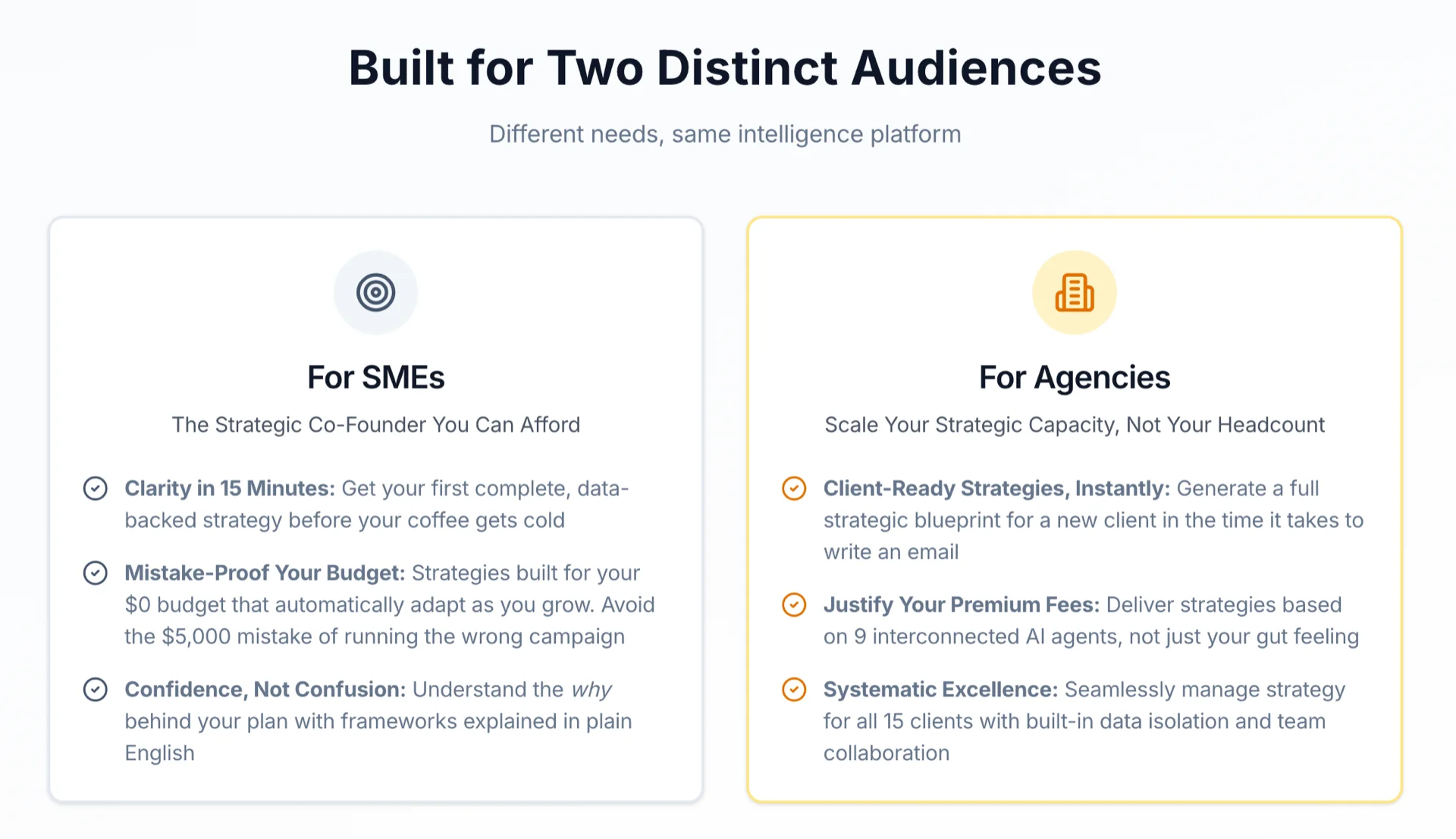
वे scroll करते हैं। Demo video देखते हैं। Comparison table देखते हैं। तब तक जब वे Section #6 ("Built for Two Distinct Audiences") hit करते हैं और "Scale Your Strategic Capacity, Not Your Headcount" देखते हैं, वे already decide कर चुके होते हैं यह उनके लिए नहीं है।
Landing page बुरी नहीं थी। यह बस गलत order में थी।
---
Audit: अपनी खुद की Copy पर STRAŦUM का Strategy Agent Use करना
मैंने STRAŦUM का Business Strategy Agent खोला और हमारी पूरी landing page copy paste की — सभी 7 sections, word-for-word।
मेरा prompt:
> "Current landing page copy को section by section review करें। Jobs-to-be-Done principles और outcome-focused messaging का उपयोग करते हुए, यह landing page हमारे two target audiences (SMEs और Agencies) के लिए अधिक compelling बनाने के लिए क्या improvements करेंगे?"
Strategy Agent ने 4,200-word analysis के साथ respond किया। यहाँ तीन critical insights हैं:
Insight #1: "Built for Two Distinct Audiences" को Section #2 पर Move करें
Strategy Agent का rationale:
> "Audience segmentation section को Hero section के immediately बाद रखकर, आप users को self-identify करने और product की technical details में जाने से पहले अपने specific, outcome-focused benefits देखने देते हैं। Goal user के most pressing question का जल्दी से जल्दी answer देना है: 'क्या यह product मेरे लिए है?'"
यह क्यों matters है:
- Original flow: Problem → General Solution → Technical Details → Specific Solution - Revised flow: Problem → **Specific Solution (मेरे लिए)** → Technical Proof → General Comparison
एक agency owner अब scroll करने के 2 seconds के भीतर "Scale Your Strategic Capacity, Not Your Headcount" देखता है। वे immediately self-identify करते हैं।
इस change के लिए ICE Score: Impact (9/10), Confidence (9/10), Ease (8/10) = **6.48/10** (Highest priority)
मुझे admit करना होगा, जब मैंने पहली बार यह suggestion देखा, तो मेरी reaction थी "well, obviously।" लेकिन यही बात है — यह मेरे लिए obvious नहीं था जब मैं page build कर रहा था। मैं product में इतना deep था कि मैंने सब कुछ मेरे mental model के आसपास organize किया था, visitor के नहीं। कभी-कभी एक outside perspective चाहिए (यहाँ तक कि AI का भी) यह देखने के लिए जो आपके सामने है।
Insight #2: Features से Outcomes पर Shift करें
Strategy Agent ने 14 instances identify किए जहाँ हम *product क्या करता है* पर focus कर रहे थे बजाय *customer की life कैसे improve होती है* के।
Example #1: SME Benefits
पहले (Feature-Focused)
बाद में (Outcome-Focused)
"Zero-to-Hero in 5 minutes: Your first marketing win in your first session"
"Clarity in 15 Minutes: Get your first complete, data-backed strategy before your coffee gets cold"
यह बेहतर क्यों है: "Clarity in 15 Minutes" एक specific outcome (clarity) एक time-bound result (15 minutes) के साथ promise करती है।
Example #2: Agency Benefits
पहले (Feature-Focused)
बाद में (Outcome-Focused)
"Multi-tenant native: Complete data isolation between clients, team role management, secure access"
"Client-Ready Strategies, Instantly: Generate a full strategic blueprint for a new client in the time it takes to write an email"
यह बेहतर क्यों है: Agency owners यह सोचकर नहीं उठते "मुझे better data isolation चाहिए।" वे सोचते हैं "मुझे Friday तक इस new client के लिए एक killer strategy deliver करनी है।"
यह थोड़ा sting किया :P Agency side पर 18 साल के बाद, मुझे यह better जानना चाहिए था। मैं countless pitch meetings में बैठा हूँ जहाँ हमने capabilities से lead किया — और मैंने prospects की आँखें हर बार glaze होते देखी हैं। फिर भी यहाँ मैं था, अपनी खुद की landing page पर exactly वही कर रहा था। पुरानी आदतें, शायद।
Insight #3: Progressive Learning में Concrete Examples जोड़ें
हमारी "Day 1, Week 1, Ongoing" timeline *कैसे* Progressive Learning काम करती है explain करती थी, लेकिन visceral benefit नहीं दिखाती थी।
Strategy Agent का suggestion:
> "Week 1 revision: एक concrete example add करें। 'Tell the Persona Agent about your target customer's pain points, और Content Agent automatically सभी future outputs के लिए tone और messaging adjust करता है।'"
यह single sentence तीन काम करती है:
1. Cross-agent intelligence sharing prove करती है 2. Time savings दिखाती है 3. System intelligence demonstrate करती है
Lesson: Dogfooding वह Reveal करती है जो Analytics नहीं कर सकती
AI products build करने के बारे में यह बात है: आप latency, hallucination rates, और token costs पर obsess कर सकते हैं। लेकिन अगर आपकी landing page convert नहीं होती, तो कोई technical excellence matter नहीं।
STRAŦUM का Strategy Agent हमारी खुद की landing page audit करने के लिए use करने ने मुझे तीन uncomfortable truths confront करने के लिए मजबूर किया:
Truth #1: मैं Product के बहुत Close था
मैंने 75 दिन 9 AI agents build करने में बिताए थे। मैं हर feature, हर technical decision, हर architectural pivot जानता था। लेकिन मैं user के first impression से out of sight हो गया था।
Truth #2: Features Sell नहीं करते — Outcomes करते हैं
"Multi-tenant native with complete data isolation" एक feature है। "Seamlessly manage strategy for all 15 clients" एक outcome है।
Strategy Agent का Jobs-to-be-Done analysis ने 14 ऐसी जगहें reveal कीं जहाँ हम benefit की जगह architecture बेच रहे थे।
Truth #3: Structure Content से ज़्यादा Matter करता है
"Built for Two Distinct Audiences" को section #6 से section #2 पर move करने ने copy का एक single word नहीं बदला। लेकिन इसने fundamentally user journey बदल दिया।
Day 2: Whitelist Confirmation Email को Dogfooding
Landing page live है। Users sign up कर रहे हैं। लेकिन तब मैं whitelisted users को भेज रहा email देखता हूँ।
यह... great नहीं है।
Problem: Information Overload, No Clear Path
Original email:
- 500+ words of text - 9 AI agents 3 categories में organized - Feature list: "Progressive Learning," "Multi-campaign management," "Brand Guidelines" - Vague CTA: "Start with the Strategy agent" - कोई clear onboarding path नहीं
Strategy Agent की Diagnosis:
मैंने पूरी email Strategy Agent को feed की:
> "यह मेरी whitelist confirmation email है। Goal immediate sign-up drive करना और user को first high-value action तक guide करना है। Jobs-to-be-Done principles का उपयोग करते हुए, इसे कैसे more compelling और action-oriented बना सकते हैं?"
Strategy Agent की response (summarized):
1. बहुत ज़्यादा steps — Original email में business profile fill करने सहित 4 steps थे। Value से पहले Friction। 2. Feature-focused, outcome-focused नहीं 3. Missing clear time commitment 4. Next का कोई teaser नहीं
Strategy Agent की recommendation:
> "एक clear 2-step path बनाएं: (1) Sign up, (2) Strategy Audit Run करें। Business profile step हटाएं — users बाद में discover कर सकते हैं।"
Key Insight: Value से पहले Friction Remove करें
Strategy Agent ने landing page और email दोनों में same pattern identify किया: Users value से पहले friction experience करते हैं।
Landing page: Generic sections के 4 sections पढ़ने के बाद Section #6 में self-identify।
Email: Strategy Audit मिलने से पहले business profile complete करना।
दोनों cases में, fix structural था: Value proposition forward move करें। Unnecessary steps remove करें।
---
Meta-Lesson: आपका Product आपके Product को Improve करना चाहिए
48 घंटों में दो dogfooding sessions। Same Strategy Agent। Different outputs (landing page, email)। Same underlying insight: Value से पहले Friction Remove करें।
यह पूरा experiment इसलिए possible था क्योंकि हमने STRAŦUM को strategic intelligence layer के रूप में build किया — सिर्फ content generator या chatbot नहीं।
और फिर हमने दोनों implement किए। Same day (landing page), same hour (email)।
यही "Intelligence Over Execution" का मतलब है practice में। "Move fast and break things" नहीं। बल्कि "पहले analyze करो, confidently execute करो।"
---
P.S. अगर आप solo founder या small agency हैं AI space में build कर रहे: अपने product को अपने product पर use करें। इसलिए नहीं कि यह cute meta-marketing है, बल्कि इसलिए कि आपको bugs, UX issues, और copy problems मिलेंगी जो कोई amount of user interviews reveal नहीं करेगी।
Dogfooding optional नहीं है — यह आपका competitive advantage है।
इस पूरे exercise को देखते हुए जो मुझे सबसे ज़्यादा strikes करता है वह यह है कि यह कितना humbling है। मैंने 75 दिन 9 AI agents build करने में बिताए, और मेरी खुद की landing page वही mistakes कर रही थी जिनके बारे में मैंने दो decades से clients को coach किया है: features से lead करना, value proposition bury करना। मुझे शायद गलत लगे, लेकिन मुझे लगता है अधिकांश solo founders इस trap में पड़ते हैं।
क्या आपने कभी अपना product dogfood किया और जो पाया उससे surprised (या embarrassed :D) हुए? मुझे सुनना अच्छा लगेगा।
शुभकामनाओं सहित,
Chandler
---
मैं STRAŦUM build कर रहा हूँ क्योंकि agency side पर 18 साल के बाद, मैं marketing teams को execution पर strategy से ज़्यादा समय बिताते देखते थक गया। यह एक strategy intelligence platform है — 9 AI agents, 11 strategic frameworks, progressive learning — और यह अभी भी Private Alpha में है। अगर आप Strategy Agent को action में देखना चाहते हैं, https://stratum.chandlernguyen.com/request-invitation पर access request करें।
मैं DIALØGUE भी build कर रहा हूँ — एक AI podcast generator जो किसी भी topic या PDF को full episode में बदलता है।