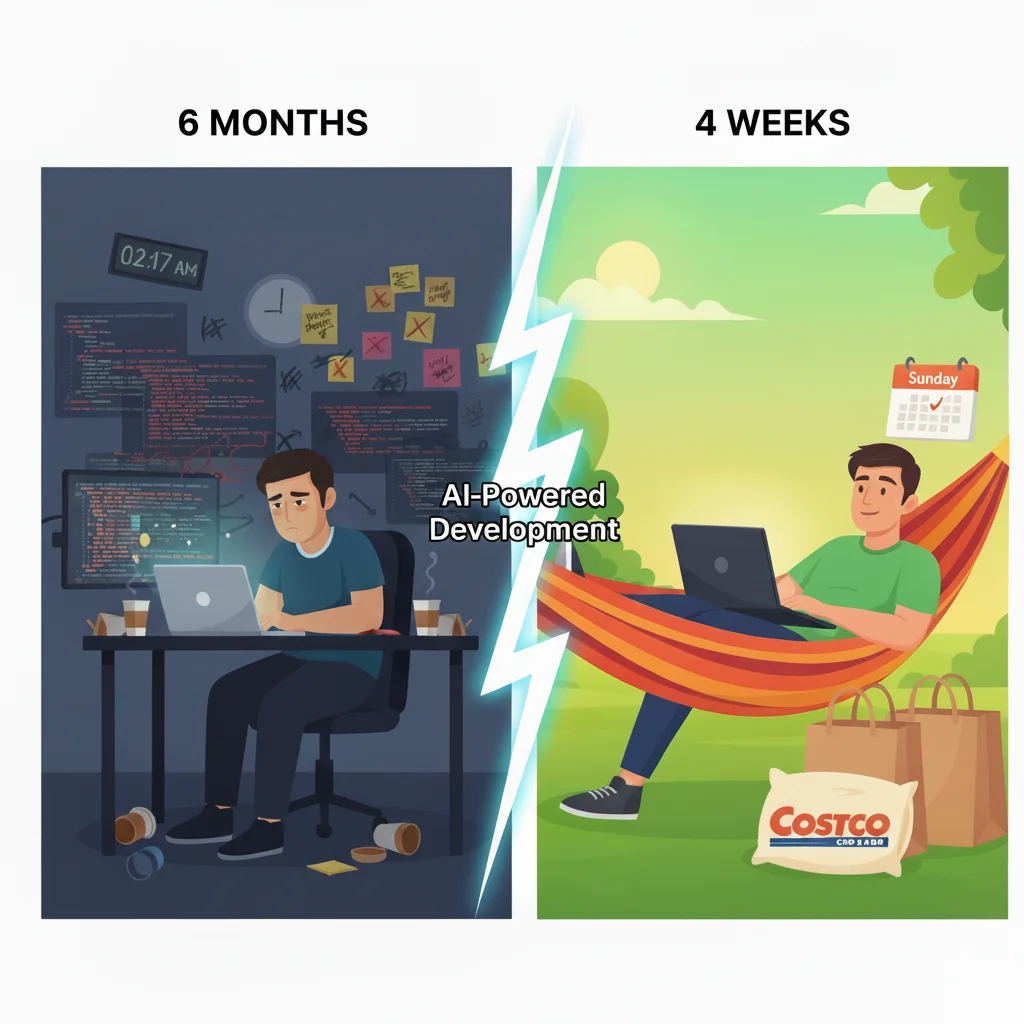
AI Without Memory Is Just an Expensive Chatbot
I built 9 AI agents that forgot everything between conversations—wasting users 20-45 minutes weekly re-explaining their business. Here's how I made them share memory.
I've now built three AI products — Sydney (my personal chatbot), DIALØGUE (AI-generated podcasts), and STRAŦUM (a marketing intelligence platform with 9 AI agents). And there's one lesson I keep learning the hard way: AI without memory is just an expensive chatbot.
The first time this really hit me was early in STRAŦUM's development. I had two working agents generating genuinely useful insights, but they didn't talk to each other. Every conversation started from scratch.
Tell the Strategy Agent about your market expansion plans? Great insights. Switch to the Content Agent next week? You have to explain your expansion strategy all over again. It was like having nine brilliant colleagues who all had amnesia :P
I'd actually seen a version of this problem before with Sydney. When I first built her RAG system, she could answer questions about my blog posts, but she couldn't remember what you'd asked her two minutes ago. Every question was a fresh start. It was... fine, I guess? But it didn't feel like a conversation. It felt like interrogating a search engine.
With STRAŦUM, this problem was 9x worse. Nine agents, zero shared context.
By the time I'd been building for about two months, I'd figured out a solution — what I'm calling "progressive learning." Tell one agent about a business goal, and all nine agents know about it next time. No re-explaining. No context loss. I think this is the feature that transformed STRAŦUM from "9 separate tools" into something that actually feels like one intelligent platform.
This is the story of how I built it. I might be wrong about some of the conclusions I draw here — I'm still learning what works and what doesn't — but I want to share what I've figured out so far.
The Problem: Users Became Documentation Machines
Let me show you what early STRAŦUM conversations actually looked like:
Week 1 with Strategy Agent:
> User: "We're planning to expand into the European market next quarter"
> Agent: [Generates comprehensive market entry strategy]
Week 2 with Content Agent:
> User: "Create LinkedIn posts for our campaign"
> Agent: "What topics should these posts cover?"
> User: "...our European expansion? Remember? From last week?"
> Agent: "I don't have context about European expansion. Can you explain?"
I have to admit, when I first saw this happening during testing, I was embarrassed. The user had already told us everything. The Strategy Agent knew. The information was sitting right there in our database. We just weren't connecting the dots.
From my experience across all three products I've built, this is the pattern: users don't mind explaining things once. They mind explaining things again. There's a fundamental difference between "teaching the AI" and "being the AI's secretary."
I did some rough math on how much time this was wasting:
- Average re-explanation time: 2-3 minutes per conversation
- Conversations per week: 10-15 across all agents
- Time wasted per user: 20-45 minutes weekly
- Annual productivity loss: 17-39 hours per user
At scale, this adds up fast. For a platform with 10,000 users, that's 170,000-390,000 hours of wasted human time annually. Even if those numbers are off by half, that's... a lot of people repeating themselves to a machine.
---
The Vision: "Tell One Agent, Inform All Nine"
So I started thinking — what if agents could learn from each other's conversations? I'd already seen something like this work in a simpler form with Sydney: she uses RAG to "remember" my blog posts and career history. But STRAŦUM needed something more dynamic — not just retrieving static content, but capturing new information from live conversations and sharing it across agents.
The ideal experience I was chasing:
1. User discusses market expansion with Strategy Agent (Day 1)
2. Platform automatically captures the key business insight
3. User talks to Content Agent (Day 7)
4. Content Agent already knows about the expansion plans
5. No re-explaining. Just intelligent context.
I think this is what makes the difference between an AI tool people use occasionally and one they actually rely on. It's not about fancy features — it's about the part that remembers you.
---
How It Works: The User Experience
Automatic Learning
This was the hardest part to get right, honestly. Every time you have a meaningful conversation with any agent, STRAŦUM tries to identify key business insights worth remembering:
- Market expansion plans
- Target audience characteristics
- Budget constraints
- Competitive positioning
- Brand guidelines
- Pricing strategies
- etc
You don't have to do anything. The platform learns as you work. (Well, that's the goal. I'm still tuning the "what's worth remembering" part — more on that in the lessons learned section.)
Cross-Agent Intelligence
This is the part that gets me excited :D The magic happens when you switch agents. That budget constraint you mentioned to the Performance Agent? The Campaign Agent knows about it when recommending ad spend. The market expansion you discussed with Strategy? The Content Agent factors it into your messaging recommendations.
Nine agents. One shared understanding of your business.
It reminds me of how DIALØGUE works, actually — when it generates a podcast, it needs to remember the user's expertise area, their preferred style, their audience. Different context, same principle: AI that remembers you is fundamentally different from AI that doesn't.
Here's what that looks like in practice — when you start a new conversation, relevant context from past interactions is automatically available:
```python
# Every agent conversation starts with your business context
async def get_business_context(org_id: str) -> str:
    """
    Retrieve relevant insights from previous conversations.
    Each agent sees what matters for your business.
    """
    insights = await fetch_recent_insights(org_id)

    # Context flows automatically to every agent
    return build_context_summary(insights)
```
The actual implementation involves careful filtering and relevance scoring—but the principle is simple: your agents remember what matters.
Complete Transparency
Here's something I learned the hard way: AI memory can feel creepy if you don't know what's being remembered. Early in testing, I showed someone the system and their first reaction was "wait, what else does it know about me?" That's not the reaction you want.
So I built complete transparency into the system. Here's the UI component that lets users see and control their business intelligence:
```typescript
// Users see exactly what the platform learned
export function BusinessIntelligenceDashboard() \{
  const { insights \} = useBusinessContext();

  return (
    <div className="space-y-4">
      <h2>What STRAŦUM Knows About Your Business</h2>
      {insights.map(insight => (
        <InsightCard key={insight.id}>
          <div className="flex justify-between">
            <span className="font-medium">{insight.summary}</span>
            <Badge>{insight.source_agent}</Badge>
          </div>
          <p className="text-sm text-muted">
            Learned \{formatDate(insight.created_at)\}
          </p>
          <Button
            variant="ghost"
            onClick={() => deleteInsight(insight.id)}
          >
            Remove this insight
          </Button>
        </InsightCard>
      ))}
    </div>
  );
}
```
- See everything: A dedicated dashboard shows exactly what the platform learned
- Source attribution: Know which agent learned what, and when
- Easy deletion: One click to remove any insight you don't want remembered
- No hidden learning: Everything is visible and reviewable
Users trust the system because they control it.
---
Real-World Examples
Example 1: Market Expansion
Day 1 - Strategy Agent:
> User: "We're planning to expand into the European market next quarter, starting with Germany and the UK."
> Agent: [Generates comprehensive market entry strategy]
*Platform captures: European market expansion planned, targeting Germany and UK*
Day 7 - Content Agent:
> User: "Create LinkedIn posts for next month"
> Agent: "I see you're planning European expansion. Should these posts prepare your audience for your international launch?"
No re-explaining needed.
Example 2: Budget Awareness
Day 5 - Agent:
> User: "Our marketing budget is around $10k/month"
> Agent: [Generates budget allocation analysis]
*Platform captures: Monthly marketing budget ~$10,000*
Day 15 - Campaign Planning Agent:
> User: "Should we run paid ads?"
> Agent: "Based on your monthly budget, I recommend a balanced allocation across paid channels and content creation..."
Budget context remembered.
---
The Multi-Tenant Challenge
Progressive learning gets complicated when you're serving both SMEs and agencies.
For SMEs: Straightforward. All intelligence belongs to the organization.
For Agencies: Each client's intelligence must stay completely isolated. An agency managing client A and client B can never have client A's strategy accidentally inform client B's recommendations.
# Agency context is always client-scoped
def get_insights_for_conversation(org_id: str, client_id: str | None):
    """
    SMEs: client_id is None, see all org insights
    Agencies: client_id filters to specific client only
    """
    if client_id:
        # Agency user working on specific client
        # client A insights NEVER leak into client B context
        return fetch_client_insights(org_id, client_id)
    else:
        # SME user, all org insights available
        return fetch_org_insights(org_id)
This isn't just a feature—it's a trust requirement. One leak and agency users lose confidence permanently.
We invested heavily in data isolation at every level—application logic, database policies, and extensive testing. Client A's business intelligence stays with Client A. Always.
---
Why This Creates a Real Advantage
I want to be honest about something: I'm not a SaaS strategist. I'm a builder who spent 18 years in advertising before learning to code. But from my experience building three AI products, I think progressive learning creates a real advantage for a few reasons.
Increasing Returns
The longer users use the platform, the smarter it gets. Each conversation adds context. Each insight makes future conversations better.
Traditional AI tools: Same experience on Day 1 and Day 100.
Progressive learning: Day 1 = good. Day 100 = exceptional.
I've seen this pattern with Sydney too — her RAG system means she's more useful now than she was six months ago, simply because there's more content for her to draw from. Memory compounds.
Why People Stay
Once the platform knows your business deeply, switching to a competitor means starting over. You lose:
- Months of accumulated intelligence
- Context about your market strategy
- Audience insights built across agents
- Budget constraints and goals
After 30 days of regular usage, the platform captures the majority of your business context. I think this is why people stick around — not because they're locked in, but because starting over somewhere else genuinely feels like a step backward.
Network Effects Within Organizations
For agencies managing multiple clients (and this is close to my heart — I spent most of my career in agencies), progressive learning multiplies:
- Each client's intelligence accumulates independently
- Every client relationship deepens the platform's value
- The value scales with portfolio size
An agency with 10 clients gets 10x the benefit of a single user.
Hard to Replicate
I might be wrong about this, but I believe building progressive learning requires deep integration across:
- AI response generation
- Background processing
- Multi-tenant data isolation
- User control interfaces
- Cross-agent context sharing
It's not something you bolt on after the fact. It's woven into the architecture from the ground up.
---
The Business Impact
Here are the numbers I'm tracking (I always try to be specific about these things):
Time saved per user:
- Before: 2-3 minutes re-explaining per conversation
- Conversations per week: 10-15
- Annual time saved: 17-39 hours per user
What I Expect for Retention
I'll be honest — I don't have enough data yet to prove this definitively. STRAŦUM is still in alpha. But my hypothesis, based on what I've seen so far:
- Users who accumulate significant saved insights are less likely to switch
- The more context invested, the harder it becomes to start over elsewhere
- Progressive learning should correlate directly with retention
I'm tracking this closely. If I'm wrong, I'll write about that too :P
What makes this actually useful (beyond the numbers):
- You don't have to be your AI's secretary anymore
- Context builds up naturally over time
- The platform gets better the more you use it — without extra effort from you
---
Lessons Learned (The Hard Way)
These aren't theoretical insights — these are mistakes I actually made.
1. AI Memory Requires User Control
Early versions felt like surveillance. I showed it to a friend and his exact words were "this is creepy." Not the feedback you want.
The fix: Complete transparency. Show everything. Let users delete anything. No hidden learning.
Result: Users trust the system because they control it. (I should have known this — I had the same instinct when I built Sydney's conversation interface. People want to see what's happening under the hood.)
2. Quality Over Quantity
My first instinct was to remember everything. Every sentence. Every detail. I'm a "more data is better" person — 18 years in analytics will do that to you. But it was overwhelming and unfocused.
The fix: Only capture high-confidence, strategically relevant insights. Quality beats quantity.
Result: Focused context that actually improves conversations.
3. Less Context Is Often Better
This one surprised me. Injecting too much context into conversations made responses slow and unfocused. It turns out that when you give Claude a wall of background information, it tries to reference all of it — even when most of it isn't relevant.
The fix: Curate carefully. Only include what's relevant to the current conversation.
Result: Faster responses, more focused recommendations. I'm still figuring out the right balance here.
4. Multi-Tenant Isolation Is Non-Negotiable
One bug in data isolation could destroy user trust permanently. Coming from the agency world, I know how serious client confidentiality is. An agency managing client A and client B can never have data leak between them.
The fix: Defense in depth. Multiple layers of isolation. Extensive testing.
Result: Zero cross-client leakage incidents. (This is one area where I don't hedge — the isolation has to be perfect.)
---
When Does AI Memory Make Sense?
If you're building an AI product and wondering whether to invest in memory, here's my honest take. Progressive learning makes sense if:
✅ You have multiple AI touchpoints that could benefit from shared context
✅ Users have repeat interactions over days/weeks/months
✅ Context accumulates value (business strategy, preferences, constraints)
✅ Keeping users matters more than acquiring new ones
✅ You serve organizations (teams, agencies, enterprises)
❌ Skip it if:
- Single-use interactions (no repeat engagement)
- Context doesn't accumulate value
- Privacy concerns outweigh convenience
- You can't invest in proper data isolation (and I mean really invest — this isn't something you half-do)
---
Final Thoughts
Progressive learning transformed STRAŦUM from "9 separate AI agents" into something that actually feels like one intelligent platform. Users tell it once. The system remembers (or until they delete it).
I think that's the difference between a tool and a platform. Between a transaction and a relationship. Between "I use this sometimes" and "I can't work without this." But I'm still early in this journey — STRAŦUM is in alpha, and I'm learning new things about what works every week.
Building AI memory was hard. Multi-tenant isolation added complexity. The multi-tenancy foundation this sits on was its own adventure — from the Day 2 architecture decision to rebuilding it entirely on Day 67. But the result? A platform that gets smarter the more you use it.
Tell one agent. Inform all nine.
I'm curious — if you're building AI products, have you tackled the memory problem? What approaches have worked for you? I'm genuinely interested because I'm still figuring out the best way to decide what's worth remembering vs. what's noise. Let me know.
---
Try It Yourself
Reading about progressive learning is one thing. Experiencing it is another.
STRAŦUM is currently in private. I'm working with a small group of SME founders and agency teams to refine the experience before public launch.
If you're tired of re-explaining your business to AI tools that forget everything between sessions, I'd love to have you try it.
What you'll get:
- Full access to all 9 AI agents
- Progressive learning that actually remembers your business
- Direct line to me for feedback and feature requests
I'm accepting new alpha users on a rolling basis. Spots are limited — I want to give everyone personal attention during this phase.
Cheers,
Chandler